My LinkedIn conversation with Dewi Evans

This LinkedIn conversation started with me asking Dewi Evans to connect to me. I was amazed that he accepted. I guess my request contained a brief message too, but this is not recorded in my LinkedIn account. I suppose Dewi has it in an email sent to him from LinkedIn. It would be nice to see it.

Dewi – are you there, reading this?

  • Feb 3, 2024
  • Dewi Evans sent the following message at 11:46 AM
  • 11:46 AM Dear Richard. I’ve read your comments re the importance of statistics in court cases. I can’t comment on specific cases currently because of reporting restrictions.
    I would welcome discussing this with you, as it’s a matter that is worth exploring.
  • Richard Gill sent the following messages at 12:30 PM 
  • 12:30 PM I agree! I am looking forward to the reporting restrictions being lifted. Hope to talk to you within a year from now…
  • 12:32 PM Do take a look at the case of Lucia de Berk. The case is horrifically similar to that of Lucy Letby. I helped get her out of jail. Also an Italian nurse, Daniela Poggiali. I acted as expert on the applications to the CCRC of Ben Geen. I am sure he is innocent but UK criminal justice is nowadays badly tilted in favour of the prosecution.
  • Dewi Evans sent the following message at 12:36 PM
  • 12:36 PM With a bit of luck reporting restrictions will be lifted after the end of the retrial due in June.
  • Richard Gill sent the following messages at 12:44 PM
  • 12:44 PM👍
  • 6:44 PM We have both been interviewed by Raj Persaud! https://rajpersaud.libsyn.com/Raj Persaud in conversation – the podcastsrajpersaud.libsyn.com
  • Feb 6, 2024
  • 7:03 AM I’m visiting Liverpool to give a lecture next week, dept of statistics. Will probably also check out Chester. Would you like to meet? I’m not interested in reporting restrictions. They are unfair and immoral. Science must not be stopped. Chester police sent Dutch police to my door in the night to intimidate me. This only made me speak out more loudly.
  • 7:21 AM Do you have an email address? I’d like to send you some links and materials
  • 8:11 AM By the way, reporting restrictions means reporters cannot write in newspapers about evidence supporting Lucy’s innocence. However, it allows the Daily Mail to publish week by week horrible stories about how evil she is, her cushy life in jail, her friendship with another killer … You and I are not reporters. There is no law against us exchanging information. You can tell me about medicine, I can tell you about forensic science. I’m sorry for you that you live in a police state. In the Netherlands there are also disturbing developments. The state is eroding civil rights. In the UK the process has got much further.
  • 8:12 AM Fortunately, many investigative reporters are working on the case and many scientists are working on the case. The dam is starting to crack and it won’t be long before it crashes down.
  • Dewi Evans sent the following message at 9:37 AM
  • 9:37 AM No problem having a private discussion. But reporting restrictions are reporting restrictions and all that. I’ve no wish to contaminate due process. I’ve no idea re Daily Mail articles. Never read it (apart from the one where they covered the Letby story after speaking to me. My easy access email is xxxx@xxxxx.xxx
  • Richard Gill sent the following message at 10:48 AM
  • 10:48 AM Thanks for the email address! I do not wish to contaminate due process either. I wish to ensure due process. I can promise in advance of any discussion with you total confidentiality.
  • Dewi Evans sent the following message at 10:48 AM
  • 10:48 AM Thanks Richard
  • Richard Gill sent the following messages at 11:37 AM
  • 11:37 AM Interesting development: the Mirror uses a *nice* photograph of #LucyLetby. Doesn’t call her a sadistic killer. And a leading barrister calls for “open justice”. Geoffrey Robertson KC said “Open justice is the principle that makes British courts the best in the world and judges should be more vigilant in protecting it”. They used to be the best in the world. Right now they are among the worst in the developed/free world. https://www.mirror.co.uk/news/uk-news/lucy-letby-anger-cowardly-doctors-32045213Fury as ‘cowardly’ docs and nurses who worked with Lucy Letby keep names secretmirror.co.uk
  • Feb 22, 2024
  • 6:56 PM You asked for all the deaths and all the collapses in the period January 2015 to July 2016. They gave you all the deaths but only collapses when Lucy was there. There must have been at least 50 collapses when she wasn’t on duty, given the acuity of those infants. You were lied to, you were used.
  • Feb 23, 2024
  • Dewi Evans sent the following message at 10:31 AM
  • 10:31 AM That is incorrect. I received information re numerous collapses. I separated them into those that were explained by the common causes- infection, haemorrhage etc and those that were not explained, ie suspicious. The name Lucy Letby was not known to me at the time.
    As for “at least 50 collapses” I don’t know where you got that figure from.
  • Richard Gill sent the following message at 10:54 AM   
  • 10:54 AM Interesting. Your story does not match the story one gets from other sources (for instance, the police themselves). I got my figure from several neonatologists and a similar figure from nurses with experience in neonatal intensive care. Secondly, “not explained” is not synonymous with “suspicious”. This confusion of words in the minds of on experts was exactly what led to the conviction of Lucia de Berk. I recommend you study it carefully!
  • Dewi Evans sent the following message at 11:17 AM
  • 11:17 AM Away this weekend. Back Tuesday.
    Content to engage post the appeal and retrial. Information from the police was all disclosed to the Defence presumably. Those are the rules.
    No idea which other neonatologists involved. 2 gave reports for the Defence. They were not called. That’s a Defence issue.
    Read the Lucia de Berk story via Wikipedia weeks ago.
  • Richard Gill sent the following messages at 11:35 AM    
  • 11:35 AM I know, the defence was useless. Scandalous. The newspapers were appalling. Social media too. This was not a fair trial.
  • 11:37 AM Lucy Letby was a whistleblower and got crushed by the NHS. Much better to put the blame on a killer nurse than on lax consultants and poor management. Focussed on cost cutting at the expense of patient care.
  •  11:51 AM Have a. nice weekend! I just had a great visit to Liverpool and to Chester. Wonderful to see Welsh mountains in the distance from the city walls of Chester.
  • Feb 24, 2024
  • 7:31 AM All deaths in the period when Lucy was fully qualified and full time (with very much overtime) at CoCH, and 15 non-fatal collapses *selected by the gang of four* and exclusively at times when Lucy was on duty. How much of the time do you suppose she was in the ward? “Since the start of our enquiries and, as the information gathering process has continued, the scope of the investigation has now widened. We are now currently investigating the deaths of 17 babies and 15 non-fatal collapses between the period of March 2015 and July 2016” https://www.chesterstandard.co.uk/news/16329278.healthcare-worker-countess-chester-hospital-arrested-suspicion-murdering-eight-babies/
  • 8:46 AM Interestingly in this case a judge blames previous judges https://www.judiciaryni.uk/sites/judiciary/files/decisions/Re%20A%20and%20B%20(Children%20Injury%20Proof%20Suspicion%20Speculation).pdf. The root of the problem is lack of understanding of science of judges and barristers and police. They ask scientists and experts and doctors questions which those persons should not be asked, because those experts are not supposed to judge, not supposed to give their opinion given *everything* they know. This is almost impossible for a doctor who, in his or her practice, does have to judge all the time! 2015 NIFam 14judiciaryni.uk1 Neutral Citation No. [2015] NIFam 14 Ref: OHA9745 Judgment: approved by the Court for handing down Delivered: 23/09/2015 (subject to ed…
  • Jul 7, 2024
  • 9:25 AM Hi Dewi, maybe it’s time we had a chat? I don’t want to blame you. I blame NHS underfunding. Really bad police work, “experts” who don’t follow the rules (and apparently don’t know the relevant science either). The jury system, the contempt of court rules, a biased judge, a weak defence. The farce of her appeal being rejected but the CPS appeal accepted. The CCRC is utterly unfit for purpose and the next stage is going to take five to ten years. This certainly is the biggest miscarriage of justice since those big famous ones which led to the setting up of the CCRC. Of course in public you will presumably, for a while, go on saying you believe Lucy is guilty. I know all about obstinacy! Anyway: my suggestion is we do a Zoom chat, not recorded, Chatham house rules for just us two. Clear the air. I’ll tell you some things you don’t know yet, and vice versa. Win win.
  • Jul 8, 2024
  • Dewi Evans sent the following message at 10:42 AM
  • 10:42 AM Currently getting over Covid, so back to normal next week.
    Afraid I don’t agree with you re the verdict. Letby was as guilty as they come. And to date, I’ve not seen a single comment from a suitably qualified person or institution that offers a reasoned defence. As for social media – best to give it a big ignoral. CCRC?
    As a witness of course one has to work within the system, but recognise its limitations.
    As for other cases, I expect that the police are investigating them. They involve displacement of breathing tubes for no apparent reason. And of course Lucy Letby was the nurse looking after the baby at the time. I’m not in touch with the police or the investigation any longer, so it will be interesting to find the outcome. My hunch is that there are quite a lot of other cases out there.
    [Interesting that since she was suspended in July 2016 (and I knew nothing about that before the trial) there have been few deaths at Chester apparently, and no ‘suspicious’ events.]
  • Jul 25, 2024
  • Richard Gill sent the following message at 7:27 PM 
  • 7:27 PM You would say that, wouldn’t you. Sorry, you are going to end up on the wrong side of history. “No apparent reason” does not equal “murder”. There are plenty of reasons breathing tubes get displaced. A person who gives expert evidence must be completely neutral and mention alternative explanations and margins of error. They must be fully qualified too. I’m sorry, but you are going to be in deep trouble.
  • Dewi Evans sent the following message at 8:07 PM
  • 8:07 PM Richard. Just asking.
    Have you seen the clinical records of the babies? Have you seen / read the statements of the local medics and nurses? Have you read the statements of the parents? Were you at the trial? Does your medical experience extend beyond knowing which side of the bandaid you put on the wound?
    Cheshire Police are reviewing the notes of all babies at Chester, with the aid of an experienced neonatologist – I’m not involved and unaware of the findings. Don’t know if they are employing a statistician.
    So, Richard. Stick to your opinion. I’m still waiting for your evidence. But, for the record. None of my reports was based on “statistics”. It was based on Evidence. Look up its meaning. Her arrest, her charging, her guilty verdict had nothing to do with “statistics”. It was based on the Evidence of 6 independent experienced doctors, and the evidence of numerous local nurses and doctors. Evidence dear boy, Evidence!
    As for the Defence. It was their decision not to call evidence from independent clinicians and pathologists. Why do you think that was? Apart from the local plumber of course. Does one therefore assume that they consider your opinion less useful than that of a local plumber.
    Finally. Please do NOT make accusations about my evidence, or alleging that my evidence is not impartial. Half of my reports in criminal cases are at the request of the Defence. My most recent report for the Defence, just a few weeks ago, led to the Prosecution withdrawing the allegations within 2 hours of the opening of the trial.
    As for breathing tubes getting displaced for a number of reasons. For once you are correct. If you had listened to my evidence you would have known that I did not allege deliberate displacement of a breathing tube in any of the cases where I gave evidence.
    So, I’ll stick with the facts. Endorsed so far by judge and jury, Appeal Judge and 3 Appeal Court Judges. Not too bad I suppose.
    I look forward to your answers to my questions. I’m sorry if the facts (that word Evidence once more) get in the way of your opinion. But there you are. That’s a problem for you to address.
    Don’t see much point in engaging in a continuing dialogue. But thought that I should respond once.
  • Jul 26, 2024
  • Richard Gill sent the following messages at 11:08 AM
  • 11:08 AM Thanks. I hope you will keep your mind open to new evidence as it comes to light, like a real scientist always does. I hope you will also bear in mind the growing criticism against our judges and courts. UK criminal justice is just as broken as the NHS. I too stick to the facts. The fact is that Brearey and Jayaram ran to the police when they realised that they were in deep shit due to the RCPCH findings. The fact is that you violated the duty of a scientific expert, but of course, as you said, you are not really. a scientist.
  • 11:11 AM PS thanks for keeping the line of contact open! I still think that you have a fantastic opportunity to display wisdom and integrity. Do not let yourself be led by pride and vanity. Read the RSS report with great care. I talk to enough doctors who are better qualified than you to interpret those clinical notes, and many of them have access to those notes now. The arguments of appeal judges just show what big fools those people are. Also puffed up with vanity.
  • Dewi Evans sent the following message at 2:31 PM
  • 2:31 PM Not seen the RSS report! You are welcome to send it, or send me the link. But as I said, my evidence had nothing to do with statistics.
  • Richard Gill sent the following messages at 4:07 PM
  • 4:07 PM https://rss.org.uk/news-publication/news-publications/2022/section-group-reports/rss-publishes-report-on-dealing-with-uncertainty-i/. This was two years in the writing. Two of the five authors are lawyers RSS publishes report on dealing with uncertainty in medical “murder” casesrss.org.uk
  • 4:13 PM The defence didn’t understand medicine, didn’t understand science, didn’t understand statistics. Yeah – lawyers. Defence scored an own-goal by not disputing the interpretation of the immunoassay results. I just talked to a prominent UK professor of paediatrics. I asked him what he thought about the insulin? He basically said it was just bollocks and he explained why. This means that the evidence of Hindmarsh, Milan and Wark was just bollocks too. It may take 10 years, knowing UK criminal justice, but Lucy is going to walk free, you mark my words. Cheshire Constabulary have made enormous fools of themselves, costing the UK taxpayer millions, and by digging themselves in they are only making the debacle for themselves worse.
  • Dewi Evans sent the following messages at 4:54 PM
  • 4:54 PM Who’s this professor of paediatrics Richard?
  • 4:55 PM I’ll read the 64 page report over the weekend.
  • Jul 27, 2024
  • Richard Gill sent the following messages at 6:18 AM
  • 6:18 AM I can’t tell you that professor’s name, sorry. Enjoy your weekend! Let me know if you have any questions about the report. It went pre-trial to defence, to prosecution, and in fact to all concerned parties. The man from the CPS said to me (at a pre-publication try out at the Newton Institute in Cambridge) “we are not using any statistics in the Letby case. They only makes people confused”. The defence too just did not understand the statistical issues, which are issues of scientific research methodology. And of forensic scientific investigation methodology. They got comprehensive advice from a very competent statistician but did not understand a word of it.
  • 6:23 AM Sarrita Adams and I sent her medical analyses to the court during the trial, as an amicus brief. It was intercepted by Cheshire Police who sent Dutch police to my door in the night to deliver an intimidating letter. It threatened arrest next time I visited UK, two years in jail, and the cost of re-running the whole trial. The witch-burning mob doxed by mother’s address in a care home in Marlow, Bucks, and planned a demonstration outside. My Mother was 97. They also disrupted a lecture I gave at Liverpool University. The Mirror wrote that I was a sick and deluded conspiracy theorist and that I was attempting to corrupt the youth of England at the university, so the university authorities were evil too. Yep. All in a day’s work when you stand up against a witch hunt. Just so you know you are not the only guy getting publicly attacked in the media.
  • 5:47 PM A friend – professor of mathematics – recently asked me: “I can’t understand why medical experts seem to often be so dishonest”. Here is my answer: “They are not scientists. They are trained to be rapid judges and executioners. That’s one thing. The other thing is the medical hierarchy, and clan forming. The paediatricians are more concerned with the paediatricians than with their patients. The youngest and least paid always have to get the blame to protect the reputation and earning power of the older and most highly paid.” These are unfortunately easily verifiable true facts! Think of all those who kept on supporting Prof Sir Roy Meadow. Maybe he was a good children’s doctor. He was however a lousy statistician and a lousy psychologist and this caused enormous disasters. No doubt he was a charming and amicable man. I always invoke Hanlon’s razor. Stupidity is a more likely cause of despicable behaviour than malice.
  • 9:12 AM Here’s a name for you. Dr Svilena Dimitrova, NHS consultant neonatologist. Neonatologists against the paediatricians? CoCH had no neonatologist. Your friend well-known bully Dr Stephen Brearey “had an interest in neonatology” but was not a neonatologist. RCPCH (paediatricians!) told CoCH to recruit a neonatologist immediately.
  •  9:14 AM I’m not saying it’s all your fault. Police lie and cheat. This has been proven again and again. Cheshire Constabulary have an especially bad reputation in this respect. I think you should cut all links with the bad guys and change sides as fast as possible, if only to save your own skin.
  • 9:16 AM The momentum is growing. The Lucy Letby case is the biggest miscarriage of justice in the UK since the Guildford 4 and the Liverpool 6 (or were they 7 or were the numbers the other way round?). Just like the Lucia de Berk case in the Netherlands. The two cases are carbon copies of one another, but things panned out much worse in every respect in the UK. Utterly failed NHS, utterly failed CJS. Appalling gutter press. You should give an interview to a quality newspaper for a change.
  • Sep 13, 2024
  • 7:07 PM Intelligent life outside the M25: what do you think of me then?
  • 7:11 PM Babies do just suddenly drop dead. The Lucia de Berk case made that clear.
  • 7:17 PM Unexplained and unexpected actually does happen all the time.
  • 7:24 PM How did you exclude infection?
  • 7:38 PM There is not one unrecordable explanation of a low C-peptide level. One of the explanations is that it is too high!!!!
  • 7:43 PM What about the hook effect?
  • Sep 24, 2024
  • 4:30 PM And could we discuss the meaning of “accuracy” and “reliability” of immunoassays to determine insulin and C-peptide concentrations? How about specificity and sensitivity? Statistical concepts, I know. Would you be interested in a public debate? Online? https://en.wikipedia.org/wiki/Sensitivity_and_specificitySensitivity and specificity – Wikipediaen.wikipedia.org
  • Oct 1, 2024
  • 9:37 AM Hi Dewi, yet again, I want to suggest you change sides! Become a hero. I know you do have the guts to do it, you are not a scared little man. I hope you’ve now studied Marks and Wark (2013) https://pubmed.ncbi.nlm.nih.gov/23751444/. It has a great summary of recommendations at the end. You see, Lucy Letby is innocent, 100% (ie, 99.99% certain, at least). Shall I show you the calculation? Science thrives on the clash of theories. As Niels Bohr once said “now we have a contradiction, at last we can make progress”. I honestly wish you well and know you are a good guy at heart. Forensic aspects of insulin – PubMedpubmed.ncbi.nlm.nih.gov
  • 9:45 AM This is also worth re-reading. https://www.researchgate.net/publication/15580088_Practical_concerns_about_the_diagnosis_of_Munchausen_syndrome_by_proxy(PDF) Practical concerns about the diagnosis of Munchausen syndrome by proxyresearchgate.net
  • Oct 2, 2024
  • 11:28 PM So you made a nice start, changing your expert medical opinion on three cases! But you are still convinced Lucy Letby was responsible. Surely that can only be by a statistical argument? But where are your statistical calculations and statistical qualifications? As far as I know neither police nor prosecution used testimony from a statistician. Lucy was often present at unpleasant events, but she worked the most hours of any nurse on that unit, and eagerly took the hardest shifts. Lucy’s defence team let her down badly, the judge was disgustingly biased. The whole disaster was not your fault. NHS managers and lawyers have a lot to answer for. Many reforms are needed. But they can only come if the system admits its failings.
  • 11:32 PM I offered my services to defence, prosecution, and to the court. But no one wanted to know. Cheshire constabulary threatened me and sent Dutch police to my door in the night, to deliver a letter in person which I’d already received by email. Very intimidating. They needed legal proof I’d received their warning.

What went wrong with the NHS went badly wrong at CoCH and it’s not a coincidence

I just recently became aware of a deep connection between Countess of Chester hospital and radical restructuring of the NHS in the early 90’s, which brought in new layers of bureaucracy and internal competition. Don’t coordinate and distribute. Instead, let hospitals compete, survival of the fittest, dynamic leadership,and innovation! We’ll end up with better health care for less money.

The connection is Sir Duncan Nichol, former chairman of the Countess of Chester hospital trust. That’s a higher management level than the hospital executive board. Side effect of the innovations was more managers with even bigger top salaries. But Nichol is not just any manager. He’s a former NHS chief-executive, “part tycoon, part mandarin”. Read all about Sir Duncan’s innovations here: https://www.managementtoday.co.uk/uk-profile-sir-duncan-nichol-nhs-chief-executive/article/409550

Source of the table: https://www.coch.nhs.uk/media/204393/BOD-March-2015.pdf, https://www.coch.nhs.uk/corporate-information/board-of-directors/board-of-directors-meeting-packs/archive.aspx. Sorry for all the misprints. CoCH management and more generally NHS management produced expensive glossy annual reports and other publicity material but it seems nobody ever bothered to check the text for spelling errors.

Here are some more quotes from Management Today, emphasis added by myself.

“Nichol helped oversee the greatest shake-up in the health service since the war. Out went the old-style consensus management where low-grade administrators charged round trying to keep high-grade doctors happy; in came a whole raft of modern business nostrums: greater pressure on cost-efficiency and customer satisfaction, the introduction of ‘internal markets’, the separation of key functions like purchasing and service provision, and, of course, the increasing use of snappy titles like chief executive and general manager.”

“Some, still seething at the enforced changes, argue that you cannot apply market doctrines to the basic tenets of caring and curing. Others, especially those working in conventional businesses, remain unconvinced that any amount of fancy tinkering will change the nature of the beast. The last few years, they note, have still been dotted with high profile examples of cash squandering on a massive scale.”

Time for a new post … on insulin

I would recommend everyone interested in the Lucy Letby case to carefully study the 58 page appeal judgement – a board of three judges refused Lucy’s application to appeal. It is only 58 pages, it is well written and carefully argued… It is just built on heaps of false assumptions. What it says about the insulin evidence is particularly significant.

Three points specifically concern the insulin babies, babies F and L: points 14, 30 and 104 [and another on the evidence of Prof Hindmarsh, which I won’t go into right now.]  Here they are in italics; my underlining.

14A proposed ground 4 (that the jury were wrongly directed on evidence relating to the persistence of insulin in the bloodstream) was withdrawn following the refusal of leave to appeal by the single judge. 

30. At trial, the integrity of the blood samples and reliability of the biochemical testing was challenged by Mr Myers. However, in her evidence at trial, the applicant [Lucy Letby!] admitted that both babies had been poisoned by insulin, but denied that she was the poisoner. The prosecution relied upon the unlikelihood of there being two poisoners at work on the unit. As the judge expressed it shortly before the jury retired to consider their verdicts: “If you are sure that two of the babies…had Actrapid, manufactured insulin, inserted into the infusion bag that were set up for them 8 months apart in August 2015 and April 2016 respectively, and you are sure that that was done deliberately, you then have to consider whether that may have been a coincidence, two different people independently acting in that way or were they the acts of the one person and, if so, who.”

104The prosecution made some general points to rebut the allegations of bias and unreliability, including that almost every opinion given by Dr Evans was corroborated by another expert. In addition, it was pointed out that Dr Evans was the person who had identified that two of the babies had been poisoned by insulin (Baby F and Baby L). This was a matter which had eluded the treating medics and went to prove that someone was committing serious offences against babies in the unit; and it was particularly important independent evidence, bolstering Dr Evans’ credibility and reliability. Further, when Dr Evans reached his conclusions, he did so without knowing about other circumstantial evidence relied on by the prosecution in establishing guilt, including the applicant’s Facebook searches, the shift pattern evidence, and the “confession” in the note recovered from the applicant’s home on 3 July 2018

Richard’s comment on point 30: the applicant was told during the trial that it had been proven that two babies had been poisoned. Her reply was not that she admitted this fact, it was more like “well if you say it is proven it must be true. But I didn’t do it”. Notice that for the prosecution, six experts all say that this was true: Evans, Bohin, Hindmarsh, Milan, Wark; the hospital doctors had concurred (Gibbs, in particular). The defence had apparently not even looked for an expert on the insulin matter. They had raised problems about the reliability of the tests but these are ignored because Lucy herself agrees that the babies were poisoned with hospital insulin.

How can a young nurse agree or disagree with a deduction made by half a dozen senior medics that the immunoassay results proved deliberate insulin poisoning? All doctors and nurses have been taught in doctors’ or nurses’ school something about insulin metabolism and know that the ratio of insulin to C-peptide (after someone has been fasting for three hours) should be about 1 to 6. They are not taught anything about the forensic determination of deliberate insulin poisoning, which tells us that an anomalous ratio is a warning sign for something that might have been happened but it should be followed up with completely different tests which exclude a numerous sets of artefacts which can each also cause an anomalous ratio of immunoassays’ numbers. The test result comes back from the lab with a warning note printed in red with exactly this information. It was ignored by hospital doctors. The specialists weren’t called in and never told about it. The babies were nicely recovering from their hypoglycaemia and were rapidly transferred elsewhere.

Note that according to point 14 the defence had submitted and withdrawn a “ground for appeal” concerning the insulin. [I don’t know what it was, someone should find out!]. Note that the insulin is seen by all concerned as proof of presence of a murderer on the unit. The court of appeal sees it as ludicrous to suggest there are two murderers on the unit! They believe that the other evidence (air embolism etc etc) proves Lucy is a murderer. The insulin evidence shows someone tried to murder babies F and L. There can’t be two murderers. Therefore Lucy also tried to murder babies F and L.

The logic of the argument is impeccable. Just the premises of the argument are wrong.

These points do show the utter incompetence of the defence team. 

One of the prosecution experts (Gwen Wark) has even published a paper Marks and Wark (2013) with a concluding list of recommendations which state that the immunoassay only suggests a possibility; in order to prove it other tests must be done. https://pubmed.ncbi.nlm.nih.gov/23751444/ They were not done. No sample was saved so they never can be done. Both babies F and L are alive and well to this day though one has cerebral palsy … linked to problems experienced during birth.

At the trial Dr. Wark confirmed the other experts’ claim that insulin poisoning had been proven. How could she? What had she written in any written testimony provided pre trial to police or CPS? Richard Thomas (Lucy’s solicitor) says that the defence team can’t say whether or not any documents exist and whether or not they saw them. The jury is not shown any such documents.

People say “the jury was given so much more, information…”. That is quite simply not true. The jury in a UK criminal trial hears what is said and it observes the body language. That’s all. It does not receive copies of written testimony of scientific experts. (This is a consequence of “open justice” with a trial by a jury of your peers).

What was the fifth ground in the original application for an appeal? The one which a single judge scrapped and the defence team then scrapped too?

Maybe some journalist should chase after that. I’m afraid the defence team is unlikely to tell us. They are not obliged to, and they can only do it if Lucy instructs them to do so. And nobody is able to talk to her.

Letter to the BMJ

Rapid response to:

John Launer: Thinking the unthinkable on Lucy Letby

BMJ 2023; 382 doi: https://doi.org/10.1136/bmj.p2197, published 26 September 2023, cite as: BMJ 2023;382:p2197

Dear Editor

I am a coauthor of the report of the Royal Statistical Society https://rss.org.uk/news-publication/news-publications/2022/section-group-reports/rss-publishes-report-on-dealing-with-uncertainty-i/. It is deeply distressing that the police investigation into the case of Lucy Letby and the subsequent trial made all of the mistakes in our book. The jury was never told how the police investigation arrived at that list of “suspicious” events and how it was further narrowed down to the list of charges. This is a case in which a target was painted around a suspect by investigators. We call it confirmation bias, in statistics. It is also often referred to as the Texas sharpshooter paradox.

Thanks to amateurs who report their work on Twitter and YouTube, we now know how the list of charges in the Lucy Letby case evolved. It is utterly scandalous that this history was not revealed to the court. Here is the broad picture. 

Doctors reported Lucy to the police, against the wishes of the hospital board.

They told the police the exact period she had been on the ward and gave them the files on all deaths in that period and on some of the incidents: namely, exactly and only those “arrests” at which Lucy had been present.

What qualifies as an incident, what is an arrest?

There is no medical category “arrest, resuscitation” under which such events are logged in hospital administration. Probably there were about five times as many such events when Lucy was not on duty, but nobody has ever looked. There is no medical definition of such an event. No formal criteria.

“Unexpected, unexplained, sudden” are also not defined in any formal way. Nor is “stable”.

Next the absolutely unqualified, long retired, paediatrician Dewi Evans, who has a business helping out in civil child custody cases, went through those medical files looking for anomalies about which he could fantasise a murder or murder attack. His ideas that milk was injected into the stomach or air into the veins were far fetched, and later not confirmed by any other evidence. On the contrary, the actual evidence certainly contradicts the idea that Lucy Letby actually attacked any child. He never gave alternative medical explanations, as would have been the obligation of a forensic scientist. All the deaths had had a post-mortem and a coroner’s report. Every single event on the charge sheet has absolutely normal explanation. Lucy was never seen doing anything wrong.

The medical experts for the prosecution merely confirmed Evans’ diagnosis, they also did not do the job of a forensic scientist.

The defence had no experts. They had brought in one paediatrician. But at the pre-trial hearing he said he wasn’t qualified in endocrinology, toxicology, etc etc etc. 

This was Texas sharpshooter, big time. Plus utterly incompetent defence. 

Richard Gill

Member of Royal Dutch Academy of Sciences

Past president of Dutch statistical society.

How to lie with data

This spreadsheet was shown on TV both yesterday (Friday August 18, the day of the verdicts) and at the start of the trial of Lucy Letby. Apparently, Cheshire Constabulary find this absolutely damning evidence against Lucy. And indeed, many journalists seem to agree.

The 25 events are almost all of the events at which LL was present during the periods investigated. They are suspicious because she was under suspicion when the police started their investigations. Not surprisingly, most nurses are not present at many of these events. And of course, many nurses probably work far fewer hours than LL. Many are often on administrative duties.

The doctors on the ward are of course missing. Doctors were never investigated as suspects but from the start of police investigations apparently always believed to speak gospel truth. During cross-examination, during the trial, some of them have changed various parts of their stories. Of course, unlike Lucy, they do not lie, since they could never (under oath in court, or earlier, when being interviewed as witnesses by police) be saying untruths in order to deceive.

Back to the spreadsheet. When drawing conclusions from any data it is important to know how it was gathered. It is important to know what data is missing, but would be needed draw even the most preliminary and tentative inferences.

There was an NHS investigation into the raised rates of deaths and collapses at Countess of Chester Hospital (CoCH) in summer 2015 and summer 2016. It was published in 2017 by the Royal College of Paediatrics and Child Health (RCPCH). The investigation blamed the consultants for the appalling low standard of care, and the terrible situation regarding hygiene. The RCPCH investigators actually wrote that nurse Lucy Letby could not be associated with the events, but that passage was redacted out of the published report for privacy reasons. We know that already, consultants had presented their fears to hospital management. One of them (successful TV doctor and FaceBook influencer dr Ravi Jayaram) was on TV yesterday proudly telling the world that he had been vindicated. Management was inclined not to believe them, and did not act on them, but they certainly came to the ears of the RCPCH. On publication of the report, four consultants had had enough, and went to the police with their suspicions that LL was a murderer.

Thanks to FOI requests and statistical analysis by independent scientists, we now know that the rate of events (deaths and collapses) is just as much raised when Lucy is not on the ward as it is when she is on the ward. A lot of medical information (as well as the state of the drains at CoCH) points to a seasonal virus epidemic.

The elevated rate went back to normal after the hospital was down-graded (no longer accepting high risk patients), and when the drains were rebuilt, and when the senior consultant retired, all of which happened soon after the police investigation started. Incidentally, the rate of still-births and miscarriages show exactly the same pattern.

Lucy must certainly have been a witch in order to kill babies in the womb and even when she is far from the hospital.

Those familiar with miscarriages of justice involving serial killer nurses will be familiar with this police and prosecution tactic. Is it evil or is it just stupid? (cf. Hanlon’s razor). I think it is quite simply “learnt”. Police and prosecution learn what convinces jurors over the years, and that is why the same “mistakes” are made again and again. They work!

The bogeyman (Algemene Dagblad, 26 January)

date2023-01-26 09:38:02

Richard Gill. © Rob Voss

Professor Gill helped exonerate Lucia de B., and is now making mincemeat of the CBS report on benefits affair

Top statistician Richard Gill cracks down on the research conducted by Statistics Netherlands (CBS) into custodial placements of children of victims in the benefits affair. ‘CBS should never have come to the conclusion that this group of parents was not hit harder than other parents.’

Carla van der Wal 26-01-23, 06:00 Last update: 08:10

Emeritus professor Richard Gill would prefer to pick edible mushrooms in the woods and spend time with his grandchildren. Nevertheless, the top statistician in the Netherlands, who previously helped to exonerate the unjustly convicted Lucia de B, is now firmly committed to the benefits affair.

CBS should never have started the investigation into the custodial placement of children of victims in the benefits affair, says Gill. “And the conclusion that this group of parents has not been hit harder than other parents, CBS should never have drawn. It left many people thinking: only the tax authorities have failed, but fortunately there is nothing wrong with youth care. So all the fuss about ‘state kidnappings’ was unnecessary.”

After Statistics Netherlands calculated how many children of benefit parents were placed out of home (in the end it turned out to be 2090), it seemed that victims in the affair lost their children more often than similar parents who were not victims. The results were presented on November 1 last year, which Gill now denounces.

Gill is emeritus professor of mathematical statistics at Leiden University and in the past was an advisor to the methodology department of Statistics Netherlands. In the case of Lucia de B. he showed that calculations that would show that De B. had more deaths in her services were incorrect.

CBS abuses

There is a special reason that Gill is now getting stuck in the benefits affair – but more on that later. First about the CBS report. Gill states that Statistics Netherlands is not equipped for this type of research and points out that after two research methods were dropped, only one ‘not ideal, but only option’ remained. He also thinks, among other things, that the more severely affected victims in the benefits affair should be the focus of the investigation. He emphasizes that relatively mildly affected families most likely had to deal with much less drastic consequences. CBS itself also says that it likes to use information about the degree of duping, but that there was none.

CBS also acknowledges some criticisms. “CBS itself has mentioned a number of comments to the report. There seems to be a misunderstanding on one point,” said a spokesperson, who also said that CBS still fully supports the conclusions. CBS will soon be discussing the methodology used with Gill, but in any case CBS sees itself as the right party to carry out the study. “CBS has the task of providing insight into social issues with reliable statistical information and data and has the necessary expertise and techniques. In this case there was a clear social need for statistical insight.”

Gill thinks otherwise and thinks it’s important to raise this. Because he is awakened by injustice. That was also a reason to offer his help when questions arose about the conviction of Lucia de B., who can simply be called Lucia de Berk again since her acquittal. In 2003 she was sentenced to life imprisonment.

Out-of-home placement

With the acquittal in 2010, Gill became not only a top statistician, but also a beacon of hope for people who experienced injustice. And José Booij, a mother of a child placed in care, contacted him many years ago.

Somewhere in Gill’s house in Apeldoorn there is still a box with papers from José. It contains diaries, newspaper clippings and diplomas of hers. She was a little different from other people. A doctor who fell for women, fled the Randstad and settled in Drenthe. There she became pregnant and had a baby. And she had a neighbour with whom she had a disagreement. “That neighbour had made all kinds of reports about José to the local police, said that something terrible would happen to the child.” After six weeks, José’s daughter was removed from home.

State kidnapping

“What happened to José at the time, I also call that a state kidnapping, just as the custodial placements among victims of the benefits affair are now called.” The woman continued to fight to get her child back. But gradually that fight drove her insane. She lost her job, she lost her home. She fled abroad. “Despite a court ruling that the child had to be returned to José, that did not happen. José eventually derailed. I now know that she has left information with more people in the Netherlands to ensure that it is available to her daughter when she is ready. But I can’t find José anymore. I heard she was seen in the south of the Netherlands after escaping from a psychiatric clinic in England.”

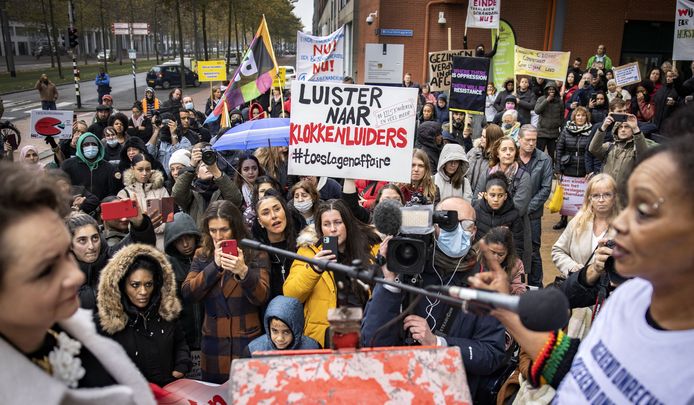
Text continues below the photo

Demonstration by victims of the benefits affair. © ANP / ANP

And meanwhile he keeps that box. And Gill thinks of José, when he considers the investigation by the Central Bureau of Statistics into custodial placements of children of victims in the benefits affair. Gill makes mincemeat of it. “The only thing CBS can say is that the results suggest that the differences between the two groups that have been compared are quite small. There should be a lot more caution, and yet in the summary you see bold summaries, such as: ‘Being duped does not increase the likelihood of child protection measures’. I suspect that CBS was put under pressure to conduct this study, or wanted to justify its existence. Perhaps there is an urge to be of service.”

Time for justice

Now is the time to put that right, Gill thinks. Research needs to be done to find out what’s really going on. “I had actually hoped that younger colleagues would have stood up by now, who would take up such matters.” But as long as that doesn’t happen, he’ll do it himself. Maybe it’s in his genes. It was Gill’s mother – he was born in England – who helped crack the enigma code used by the Germans to communicate during World War II. Gill wasn’t surprised when he found out. He already suspected that his excellent mind was inherited not only from his father, but also from his mother.

Love

Yet in the end it was his wife – the love of whom led him settle in the Netherlands – who put him on this track. She pointed Gill to Lucia de Berk’s case and encouraged him to get to work. She may have regretted that. For example, when Gill threatened to burn his Dutch passport during a broadcast of The World Keeps on Turning Round (“De wereld draait door”) if the De Berk case was not reviewed. “She said, ‘You can’t say things like that!'”

In fact, he would like to enjoy his retirement with her now – he has been out of paid work for six years now. Then he would spend his days in the woods looking for edible mushrooms. And spend a lot of time with his grandchildren. But now his calculations also help exonerate other nurses. Last year, Daniela Poggiali was released in Italy after Gill interfered with the case together with an Italian colleague. There are still things waiting for him in England.

And so the benefits affair is here in the Netherlands, which, as far as Gill is concerned, needs more in-depth, thorough research to find out exactly what caused the custodial placements. “That is why I ended up with Pieter Omtzigt and Princess Laurentien, who are also involved in the benefits affair.” Among the people who express themselves diplomatically, he wants to be the bad cop, the man who shakes things up, as he did when he threatened to set his passport on fire. But at the same time, he also hopes that a young statistician will emerge who is prepared to take over the torch.

CBS provided this site with an extensive explanation in response to Gill’s criticism. It recognizes the complexity of this type of research, but sees itself as the appropriate body to carry out that research. An appointment to speak with Gill has already been scheduled. “CBS always tries to explain as clearly and transparently as possible in its reports what has been investigated, how it was done and what the results are.”

Statistics Netherlands also points to nuances in the text of the report, for example after the sentence above a piece of text: ‘Being duped does not increase the chance of child protection measures’. “On an individual level, there may be a relationship between duping and youth protection, which is stated in several places in the report.” Even if ‘on average no evidence is found for a relationship between duping and youth protection’, as Statistics Netherlands notes.

Statistics Netherlands fully supports the research and the conclusions as stated in the report. It is pointed out, however, that there are still opportunities for follow-up research, as has also been indicated by Statistics Netherlands.

De boeman (Algemene Dagblad, 26 januari)

Richard Gill. © Rob Voss

Hoogleraar Gill hielp bij vrijpleiten Lucia de B., en maakt nu gehakt van CBS-rapport toeslagenaffaire

Topstatisticus Richard Gill kraakt het onderzoek dat het Centraal Bureau voor de Statistiek (CBS) uitvoerde naar uithuisplaatsingen van kinderen van gedupeerden in de toeslagenaffaire. ‘De conclusie dat deze groep ouders niet harder is geraakt dan andere ouders, had het CBS nooit mogen trekken.’

Carla van der Wal 26-01-23, 06:00 Laatste update: 08:10

Het liefste zou emeritus hoogleraar Richard Gill eetbare paddenstoelen plukken in het bos, en tijd doorbrengen met zijn kleinkinderen. Toch bijt de topstatisticus van Nederland, die eerder hielp bij het vrijpleiten van de onterecht veroordeelde Lucia de B, zich nu vast in de toeslagenaffaire. 

Het CBS had nooit aan het onderzoek naar de uithuisplaatsing van kinderen van slachtoffers in de toeslagenaffaire moeten beginnen, zegt Gill. ,,En de conclusie dat deze groep ouders niet harder is geraakt dan andere ouders, had het CBS nooit mogen trekken. Die liet velen denken: alleen de belastingdienst heeft gefaald, maar er is gelukkig niets mis met jeugdzorg. Al die ophef over ‘staatsontvoeringen’ was dus onnodig.’’

Nadat het CBS becijferde hoeveel kinderen van toeslagenouders uit huis werden geplaatst (uiteindelijk bleken het er 2090), leek het of gedupeerden in de affaire vaker hun kinderen kwijtraakten dan soortgelijke ouders die geen slachtoffer waren. Op 1 november vorig jaar werden de resultaten gepresenteerd, die Gill nu hekelt.

Gill is emeritus hoogleraar mathematische statistiek aan de universiteit van Leiden en was in het verleden adviseur bij de afdeling methodologie van het CBS. In de zaak van Lucia de B. liet hij zien dat berekeningen die zouden aantonen dat De B. vaker sterfgevallen in haar diensten had, niet klopten.

Misstanden CBS 

Dat Gill zich nu vastbijt in de toeslagenaffaire heeft een bijzondere reden – maar daarover later meer. Eerst nog over het rapport van het CBS. Gill stelt dat het CBS niet is ingericht op dit type onderzoek en wijst erop dat nadat twee onderzoeksmethodes afvielen slechts één ‘niet ideale, maar enige optie’ overbleef. Ook vindt hij onder meer dat zwaarder getroffen gedupeerden in de toeslagenaffaire centraal zouden moeten staan bij het onderzoek. Hij benadrukt dat relatief licht geraakte gezinnen hoogstwaarschijnlijk met veel minder ingrijpende gevolgen te maken hebben gehad. Het CBS zegt overigens zelf ook dat het graag informatie over de mate van gedupeerdheid gebruikt, maar dat die er niet was.

Het CBS erkent ook sommige punten van kritiek. ,,Een aantal heeft het CBS zelf als kanttekening genoemd bij het rapport. Op een enkel punt lijkt sprake van een misverstand’’, aldus een woordvoerder, die ook zegt dat het CBS nog volledig achter de conclusies staat. Over de gebruikte methodologie gaat het CBS binnenkort met Gill in gesprek, maar het CBS ziet zich in elk geval wél als de juiste partij om het onderzoek uit te voeren. ,,Het CBS heeft als taak om met betrouwbare statistische informatie en data inzicht te geven in maatschappelijke vraagstukken en beschikt over de nodige expertise en technieken. In dit geval was een duidelijke maatschappelijke behoefte aan statistisch inzicht.’’

Gill denkt daar anders over en vindt het belangrijk dat aan te kaarten. Want hij ligt wakker van onrecht. Dat was ook reden om zijn hulp aan te bieden toen er vragen rezen over de veroordeling van Lucia de B., die sinds haar vrijspraak gewoon weer Lucia de Berk genoemd kan worden. In 2003 werd ze veroordeeld tot een levenslange gevangenisstraf.

Uithuisplaatsing

Door de vrijspraak in 2010 werd Gill naast een topstatisticus ook een baken van hoop voor mensen die onrecht ervaarden. En nam José Booij, een moeder van een uit huis geplaatst kind, vele jaren geleden contact met hem op.

Ergens in het huis van Gill in Apeldoorn staat nog een doos met papieren van José. Erin zitten dagboeken, krantenknipsels en diploma’s van haar. Ze was een beetje anders dan andere mensen. Een jurist die op vrouwen viel, de Randstad ontvluchtte en neerstreek in Drenthe. Daar werd ze zwanger, kreeg ze een kindje. En had ze een buurvrouw, met wie ze onenigheid had. ,,Die buurvrouw had allerlei meldingen over José gedaan bij de lokale politie, had gezegd dat met het kindje iets vreselijks zou gebeuren.” Na zes weken werd Josés dochtertje uit huis geplaatst.

Staatsontvoering 

,,Wat José indertijd is overkomen, dat noem ik ook een staatsontvoering, net zoals de uithuisplaatsingen onder slachtoffers van de toeslagenaffaire nu worden genoemd.” De vrouw bleef vechten om haar kind terug te krijgen. Maar gaandeweg dreef dat gevecht haar tot waanzin. Ze raakte haar werk kwijt, ze raakte haar huis kwijt. Ze vluchtte naar het buitenland. ,,Ondanks een oordeel van de rechter, dat het kind terug moest naar José, gebeurde dat niet. José is uiteindelijk ontspoord. Inmiddels weet ik dat ze bij meer mensen in Nederland informatie heeft achtergelaten, om te zorgen dat die beschikbaar is voor haar dochter, als die eraan toe is. Maar José heb ik niet meer kunnen vinden. Ik heb gehoord dat ze nog is gezien in het zuiden van Nederland, nadat ze was ontsnapt uit een psychiatrische kliniek in Engeland.”

Tekst gaat verder onder de foto

Gedupeerden in de toeslagenaffaire demonstreren. © ANP / ANP

En ondertussen bewaart hij dus die doos. En denkt Gill aan José, als hij zich buigt over het onderzoek van het Centraal Bureau voor de Statistiek, naar uithuisplaatsingen van kinderen van slachtoffers in de toeslagenaffaire. Gill maakt er gehakt van. ,,Het enige wat het CBS kan zeggen, is dat de uitkomsten suggereren dat de verschillen tussen de twee groepen die zijn vergeleken vrij klein zijn. Er zou veel meer voorzichtigheid moeten zijn, en toch zie je in de samenvatting in vetgedrukte letters stellige samenvattingen, zoals: ‘Gedupeerdheid verhoogt de kans op kinderbeschermingsmaatregelen niet’. Ik vermoed dat het CBS onder druk is gezet om dit onderzoek te doen, of zijn bestaansrecht heeft willen verantwoorden. Wellicht is er sprake van een drang om dienstbaar te zijn.”

Tijd voor rechtvaardigheid

Nu is het tijd om dat recht te zetten, vindt Gill. Er moet onderzoek worden gedaan, om te kijken hoe het echt zit. ,,Ik had eigenlijk gehoopt dat er inmiddels jongere collega’s zouden zijn opgestaan, die dit soort zaken op zouden pakken.” Maar zolang dat niet gebeurt, doet hij het zelf wel. Misschien zit het wel in zijn genen. Het was Gills moeder – hij werd geboren in Engeland – die tijdens de Tweede Wereldoorlog meewerkte aan het kraken van de enigmacode, die door de Duitsers werd gebruikt om te communiceren. Gill verraste het niet, toen hij erachter kwam. Hij had al zo’n vermoeden dat zijn excellente verstand niet alleen een erfenis van zijn vader, maar ook zijn moeder was.

De liefde

Toch was het uiteindelijk zijn vrouw – de liefde zorgde dat hij in Nederland neerstreek – die hem op dit spoor heeft gezet. Zij wees Gill op de zaak van Lucia de Berk en stimuleerde hem ermee aan de slag te gaan. Misschien heeft ze dat wel eens betreurd. Bijvoorbeeld toen Gill tijdens opnames van De wereld draait door dreigde zijn Nederlandse paspoort te verbranden, als de zaak De Berk niet werd herzien. ,,Ze zei: dat kan je toch niet doen?”

Eigenlijk zou hij nu met haar van zijn pensioen willen genieten – hij is inmiddels zes jaar gestopt met zijn betaalde werk. Dan zou hij zijn dagen vullen in het bos, zoekend naar eetbare paddenstoelen. En veel tijd doorbrengen met zijn kleinkinderen. Maar nu helpen zijn berekeningen ook bij het vrijpleiten van andere verpleegkundigen. Vorig jaar werd Daniela Poggiali nog vrijgelaten in Italië, nadat Gill zich samen met een Italiaanse collega met de zaak bemoeide. In Engeland zijn nog zaken die op hem wachten.

En de toeslagenaffaire is er hier in Nederland dus, waar wat Gill betreft diepgravender, gedegen onderzoek naar moet komen, om uit te zoeken wat nu precies de uithuisplaatsingen veroorzaakte. ,,Ik ben daarom terechtgekomen bij Pieter Omtzigt en prinses Laurentien, die zich ook met de toeslagenaffaire bezighouden.” Tussen de mensen die zich diplomatiek uiten, wil hij best de bad cop zijn, de man die de boel opschudt, zoals hij deed toen hij dreigde zijn paspoort in de fik te steken. Maar tegelijkertijd hoopt hij toch vooral ook dat er een jonge statisticus opstaat, die bereid is de fakkel over te nemen.

Het CBS gaf deze site een uitgebreide toelichting, naar aanleiding van de kritiek van Gill. Het erkent de complexiteit van dit soort onderzoek, maar ziet zichzelf wél als aangewezen instantie om dat onderzoek uit te voeren. De afspraak om met Gill te spreken is al ingepland. ,,Het CBS tracht in de rapporten altijd zo duidelijk en transparant mogelijk uit te leggen wat onderzocht is, hoe dat is gedaan en wat de uitkomsten zijn.”

Ook wijst het CBS op nuanceringen in de tekst van het rapport, bijvoorbeeld na de zin boven een stuk tekst: ‘Gedupeerdheid verhoogt de kans op kinderbeschermingsmaatregelingen niet’. ,,Er kan op individueel niveau wél een relatie tussen dupering en jeugdbescherming zijn, dat staat op meerdere plekken in het rapport vermeld.” Ook als er ‘gemiddeld genomen geen bewijs gevonden wordt voor een relatie tussen dupering en jeugdbescherming’, zoals het CBS constateert.

Het CBS staat volledig achter het onderzoek en de conclusies zoals die in het rapport vermeld staan. Wel wordt erop gewezen dat er nog mogelijkheden zijn voor vervolgonderzoek, dat heeft het CBS ook aangegeven.

Nog meer over uitkeringsschandaal en uithuisplaatsingen

Hieronder volgt een poging (20 januari 2023, ‘s ochtends) om het kern van het verhaal op te schrijven in 500 woorden en Jip en Janneke taal. Het lukte niet.

Heeft het CBS de waarheid in pacht?

Velen werden wakker geschud door carabetier Peter Pannekoek’s woorden “1115 staatsontvoeringen”. Maar ze kunnen weer in slaap gesust zijn door het CBS rapport “Jeugdbescherming en de toeslagenaffaire – Kwantitatief onderzoek naar kinderbeschermingsmaatregelen bij kinderen van gedupeerden van de toeslagenaffaire”. Een van de belangrijkste conclusies (samenvatting, eerste bladzijde) luidt

Gedupeerdheid verhoogt de kans op kinderbeschermingsmaatregelen niet“.

Dat is een krachtige uitspraak. Geen enkel relativering, geen “kleine letters”. Geen melding dat het een uitspraak is die alleen gemaakt kan worden onder een hele reeks veronderstellingen. Helaas, een hele reeks veronderstellingen waarvan velen pertinent onwaar zijn.

Mijn antwoord: misschien geen 1115, maar misschien wel: 115

Nu munt het CBS uit in het doen van beschrijvend statistiek, wat ook hun wettelijke opdracht is. Ze dienen neutraal de feiten te ontsluiten en weer te geven die politiek en bestuur en burgers nodig hebben. Waar het CBS minder expertise in huis heeft, omdat het ook beslist niet tot hun taak behoort, is in het ontwarren van oorzaak en gevolg. Dat noemen we tegenwoordig “Causaliteit” en het is een uiterst actueel, belangrijk, subtiel, en complex onderwerp binnen het wetenschappelijk onderzoek; explosief gegroeid sinds Judea Pearls boek “Causality” uit 2000. Kan je causaliteit concluderen door het waarnemen van correlatie of associatie?

Voorbeeld. Lucia de B maakte vreselijk veel incidenten mee in haar diensten. Veel meer dan men zou hebben verwacht en dat leidde ook tot levenslange gevangenisstraf voor seriële moord. Pas later werd duidelijk dat haar aanwezigheid juist de reden was dat medisch onderzoekers bepaalde gebeurtenissen als incidenten karakteriseerden!

Maar kan geen associatie ook op causaliteit duiden? Jawel! Statistieken kunnen misleiden. Een aansprekend visuele representatie van statistieken des te meer. Mijn oog werd getrokken door Figuur 6.1.2 in het CBS rapport waarin we drie vrolijk gekleurde balkjes zijn, die de percentages 1%, 4% en 4% dienen te representeren. Zie je wel! De percentage uithuisplaatsingen bij de gedupeerden is exact wat je zou hebben verwacht, als al die gezinnen helemaal niet gedupeerd waren geweest!

Ik zou zeggen, dat kan geen toeval zijn. Na studie van het onderzoeksprotocol inclusief de vele door de team hanteerde algoritmes, wordt ook duidelijk dat het geen toeval is. Door de onderzoekskeuzes die het onderzoeksteam zich gedwongen voelde te maken is het verschil in uithuisplaatsingskans tussen “vergelijkbare” wel en niet gedupeerden systematisch verkleind. Het verschil is dus groter dan het lijkt (het lijkt nul te zijn, maar dat is het beslist niet). De juiste conclusie van het onderzoek had moeten zijn, ten eerste, dat er zeker tientallen uithuisplaatsingen “extra” plaatsvonden vanwege de affaire en mogelijk honderd (of zelfs een paar honderd). Een tweede conclusie had moeten zijn dat deze gedurfde pilot studie bewezen heeft dat een totaal ander onderzoeksopzet nodig is oude gestelde vraag te beantwoorden. Mogelijk, iets in de trant van het eerder verworpen onderzoeksvoorstel van Prof. Bart Tromp van de Universiteit Groningen. Overigens, is het nooit nodig om alle dossiers van de hele geschiedenis van alle gedupeerden door te pluizen. Door slim een aselecte steekproef in een verstandig gekozen deelpopulatie te nemen, kan men zich beperken tot het goed uitzoeken van relatief weinig gevallen.

Goede “Data Science” is onmogelijk zonder grote expertise te combineren uit drie gebieden tegelijkertijd: 1) algoritmes en computer mogelijkheden; 2) kansrekening en inferientiele statistiek (dwz het kwantificeren van de onzekerheid in de gevonden resultaten); 3) (last but not least!) vakspecifieke kennis van het beoogde toepassingsgebied; in dit geval psychologie, recht, bestuur.

De verantwoording van mijn claims ben ik momenteel aan het uitschrijven in mijn blog, https://gill1109.com/2023/01/18/de-statistiek-van-slachtoffers-van-uitkeringsschandaal/; het moet nog veel worden uitgebreid met nadere onderbouwing, verwijzingen, enzovoorts.

Ik denk aan een statistische simulatie om mijn punt te illustreren. Die twee getallen “4%” hebben foutbalken nodig van ongeveer +/- 1%. Lastig omdat ik rekening moet houden met de correlatie binnen de paren. We kunnen alleen maar raden hoe groot het is. Dus: meerdere simulaties met verschillende gissingen.

Yet more on the Dutch benefits scandal and child removals

This is a first attempt to summarise my claims in 500 words and simple language. It didn’t succeed.

Does CBS have direct access to the truth?

Many were shaken up by carabetier Peter Pannekoek ‘s words “1115 state kidnappings”. But they may have been lulled back to sleep by the CBS report “Youth protection and the benefits affair – Quantitative research into child protection measures in children of victims of the benefits affair”. One of the main conclusions (summary, first page) reads

Being a victim of the benefits scandal does not increase the likelihood of child protection measures“.

That’s a powerful statement. No relativization whatsoever, no “small print”. No mention of it being a statement that can only be made under a slew of assumptions. Alas, a slew of assumptions many of which are patently untrue.

My answer: Maybe not 1115, but could well have been 115.

Now CBS excels at doing descriptive statistics, which is also their legal assignment. They should neutrally disclose and represent the facts that politicians, administration and citizens need. Where CBS has less in-house expertise, because it is certainly not part of their task, is in disentangling cause and effect. This is what we call “Causality” today and it is an extremely topical, important, subtle, and complex subject of scientific inquiry; exploded since Judea Pearl’s 2000 book “Causality”. Can you infer causality by observing correlation or association?

Example. Lucia de B experienced an awful lot of incidents in her services. Much more than one would have expected and that also led to life imprisonment for serial murder. Only later did it become clear that her presence was precisely the reason why medical examiners characterized certain events as incidents!

But can *no* association also indicate causality? Yes! Statistics can be misleading. An appealing visual representation of statistics all the more. My eye was drawn to Figure 6.1.2 in the CBS report in which we are three brightly colored bars, which should represent the percentages 1%, 4% and 4%. See! The percentage of custodial placements among the victims is exactly what you would have expected, if all those families had not been victimized at all!

I’d say that can’t be a coincidence. After studying the research protocol, including the many algorithms used by the team, it also becomes clear that this is no coincidence. Due to the research choices that the research team felt compelled to make, the difference in out-of-home placements between “comparable” victims and non-victims has been systematically reduced. So the difference is greater than it appears (it appears to be zero, but it is definitely not). The correct conclusion of the investigation should have been, first, that there were certainly dozens of “extra” custodial placements because of the affair and possibly a hundred (or even a few hundred). A second conclusion should have been that this bold pilot study has proven that a completely different research design is needed to answer an old question. Possibly, something along the lines of Prof. dr. Bart Tromp of the University of Groningen. Incidentally, it is never necessary to go through *all* files of the entire history of all victims. By smartly taking a random sample in a sensibly chosen sub-population, one can limit oneself to properly sorting out relatively few cases.

Good “Data Science” is impossible without combining great expertise from three areas at the same time: 1) algorithms and computing capabilities; 2) probability theory and inferiential statistics (ie quantifying the uncertainty in the results found); 3) (last but not least!) subject-specific knowledge of the intended application area; in this case psychology, law, administration.

I am currently writing out the justification for my claims in my blog, https://gill1109.com/2023/01/18/de-statistiek-van-slachtoffers-van-toeslagsschandaal/; it still needs to be expanded a lot with further substantiation, references, and so on.

I’m thinking of a statistical simulation to illustrate my point. Those two numbers “4%” need error bars of about +/- 1%. Tricky because I must take account of the correlation within the pairs. We can only guess how big it is. So: several simulations with different guesses.

Statistics of victims of the Dutch child-benefits scandal

Commentary on the CBS report

Author: prof.dr. (em.) Richard D. Gill

Mathematical Institute, Leiden University

Monday January 16, 2023

Richard Gill is emeritus professor of mathematical statistics at Leiden University. He is a member of the KNAW and former chairman of the Netherlands Statistical Society (VVS-OR)

=========================================

Mr. Pieter Omtzigt has asked me to give my expert opinion on the CBS report that examines whether the number of child care placements of children by Dutch child protection authorities increased because their families had fallen victim to the child benefit scandal in the Netherlands.

The current note is preliminary and I intend to refine it further. My purpose is to stimulate discussion among relevant professionals of the methodology used by the CBS in this particular case. Feedback, please!

The report gives a clear (and short) account of creative statistical analysis of much complexity. The sophisticated nature of the analysis techniques, the urgency of the question, and the need to communicate the results to a general audience probably led to important “fine print” about the reliability of the results being omitted. The authors seem to me to be too confident in their findings.

Numerous choices had to be made by the CBS team to answer the research questions. Many preferable options are excluded due to data availability and confidentiality. Changing one of the many steps in the analysis through changes in criteria or methodology could lead to wildly different answers. The actual finding of two nearly equal percentages (both close to 4%) in the two groups of families is, in my opinion, “too good to be true”. It’s a fluke. Its striking character may have encouraged the authors to formulate their conclusions much more strongly than they are entitled to.

In this regard, I found it significant that the authors note that the datasets are so large that statistical uncertainty is unimportant. But this is simply not true. After constructing an artificial control group, they have two groups of size (in round numbers) 4000, and 4% of cases in each group, i.e. about 160. According to a rule of thumb calculation (Poisson variation), the statistical variation in those two numbers have a standard deviation of about the square root of 160, so about 12.5. That means that one of those numbers (160) could easily happen to have twice the standard deviation, which is about 25. The conclusion that the benefits scandal did not lead to more children being removed from home than without it would have been the case, certainly cannot be drawn . Taking into account the statistical sampling error, it is quite possible that the control group (those not afflicted by the benefits scandal) would have been 50 less. In that case, the study group experienced 50 more than they would have done, had they not been victims of the benefits scandal.

To make the numbers easier still, suppose there was an error of 40 cases too few in the light blue bar standing for 4%. 40 out of 4000 is 1 out of 100, 1%. Change the light blue bar from height 4% to height 3% and they don’t look the same at all!

But this is already without taking into account possible systematic errors. The statistical techniques used are advanced and model-based. This means that they depend on the validity of many particular assumptions about the form and nature of the relationships between the variables included in the analysis (using “logistic regression”). The methodology uses these assumptions for its convenience and power (more assumptions mean stronger conclusions, but threatens “garbage in, garbage out”). Logistic regression is such a popular tool in so many applied fields because the model is so simple: the results are so easy to interpret, the calculation can often be left to the computer without user intervention. But there’s no reason why the model should be exactly true; one can only hope that it is a useful approximation. Whether it is useful depends on the task for which it is used. The current analysis uses logistic regression for purposes for which it was not designed.

The assumptions of the standard model of logistic regression are certainly not exactly met. It is not clear whether the researchers tested for failure of the assumptions (for example, by looking for interaction effects – violation of additivity). The danger is that the failure of the assumptions can lead to systematic bias in the results, bias that affects the synthetic (“matched”) control group. The central assumption in logistic regression is the additivity of effects of various factors on the log-odds scale (“odds” means probability divided by complementary probability; log means logarithm). This could be true to a first rough approximation, but it is certainly not exactly true. “All models are wrong, but some are useful”.

A good practice is to build models by analyzing a first data set and then evaluating the final chosen model on an independently collected second data set. In this study, not one but numerous models were tested. The researchers seem to have chosen from countless possibilities through subjective assessment of plausibility and effectiveness. This is fine in an exploratory analysis. But the findings of such an exploration must be tested against new data (and there is no new data).

The end result was a procedure to choose “nearest neighbour matches” with respect to a number of observed characteristics of the cases examined. Errors in the logistic regression used to choose matched controls can systematically bias the control group.

Further big questions concern the actual selection of cases and controls at the beginning of the analysis. Not all families affected by the benefits scandal had to pay back a huge amount of subsidy. Mixing the hard-hit and the weak-hit dilutes the effect of the scandal, both in magnitude and accuracy, the latter because maller samples lead to relatively less accurate determination of effect size.

Another problem is that the pre-selection control population (families in general from which a child was removed) also contains victims of the benefit scandal (the study population). That brings the two groups closer together, even more so after the familywise one-on-one matching process, which of course selectively finds matches among the subpopulation most likely to be affected by the benefits scandal.

Exit mobile version
%%footer%%